

As the freight industry faces increasingly stringent environmental regulations and rising operating costs, an innovation race centered on tire technology is quietly unfolding worldwide, with intelligence and sustainable development becoming the focus of competition.
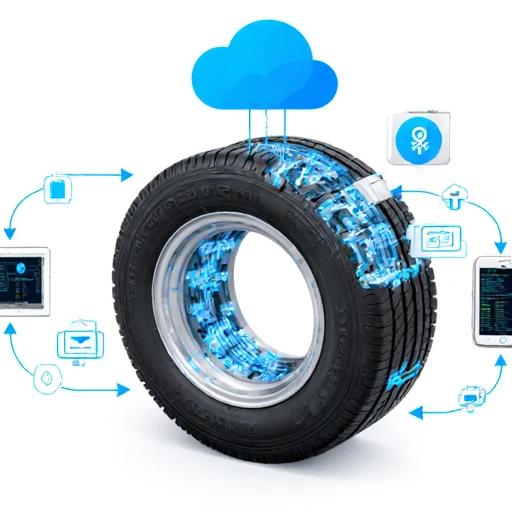
Just two days after the EU's latest "Euro 7" emission standards officially took effect, the world's leading tire manufacturer Michelin announced the launch of an intelligent tire management system. This system can monitor tire wear, pressure, and temperature in real-time and provide predictive maintenance suggestions to fleet operators via a cloud platform.
Meanwhile, Chinese tire companies are also accelerating their green transformation pace. Double Star Tire released its globally first "full life-cycle carbon neutral" tire product yesterday in Qingdao, Shandong. This product achieves carbon footprint tracking and offset throughout the entire process from raw material procurement, production manufacturing, to logistics transportation.
In the North American market, Goodyear announced a cooperation with Tesla to provide low rolling resistance intelligent tires for its Semi electric trucks, helping to increase electric vehicle range by up to 8%.
Policy Drive: Global Environmental Regulations Accelerate Tire Technology Innovation
On November 1st, the European Commission officially implemented the "Euro 7" emission standards, which for the first time include tire particulate emissions within the regulatory scope, marking the tire industry's official entry into a new era of environmental supervision.
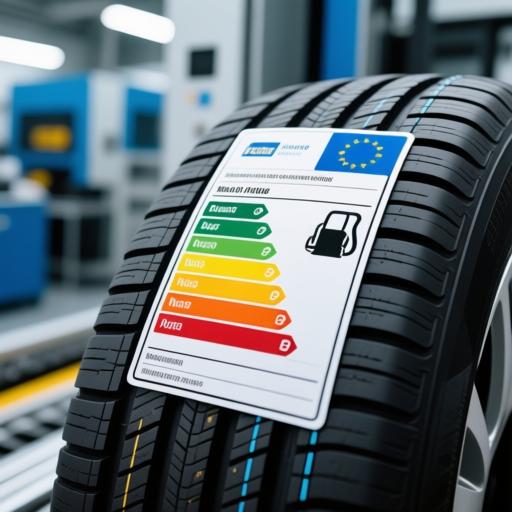
According to the new regulations, all new vehicle tires sold in the EU market must meet strict wear rate limits and be labeled with fuel efficiency, wet grip, and noise ratings.
"This is a historic turning point for the tire industry," said Adam McCarthy, Secretary-General of the European Tire and Rubber Manufacturers Association. "By 2025, all tires sold in the EU must be equipped with a digital passport, recording their environmental data throughout the entire life cycle."
Almost simultaneously, the California Air Resources Board in the US passed an Advanced Clean Fleets rule targeting heavy-duty commercial vehicles. Starting in 2024, truck fleets operating in the state must use low rolling resistance tires to reduce particulate emissions.
This rule is expected to increase the penetration rate of intelligent tires in California truck fleets from the current 15% to 40% within two years.
Asian markets are also following suit. China's Ministry of Industry and Information Technology issued the "Guidelines for Building a Green Manufacturing System in the Tire Industry" on October 31st, explicitly stating that by 2025, the proportion of green design products should reach over 25%, and the tire retreading rate should reach over 30%.
"Policies are driving industry change at an unprecedented speed," said Wang Junwei, Dean of Double Star Tire Research Institute, in an interview after the product launch. "Our carbon-neutral tire not only uses 35% renewable materials but also reduces the wear rate by 30% through a special tread formula."
Policy-driven changes are spurring a series of technological innovations. Continental Tire's developed ContiSense system uses conductive rubber compounds and built-in sensors to detect tread depth and tire wear conditions in real-time and alert the driver when replacement is needed.
"By connecting the tire to the vehicle system, we can improve the accuracy of predicting the tire's remaining service life to over 95%," said Andreas Renschler, Head of Continental's Commercial Vehicle Tires Business Unit.
Material Revolution: Bio-based and Renewable Materials Reshape Tire Manufacturing
While policies and regulations are becoming increasingly strict, innovation in tire materials is also accelerating. Several global tire manufacturers have successively launched tire products based on renewable materials in the past 48 hours, indicating that the tire manufacturing industry is undergoing a silent material revolution.
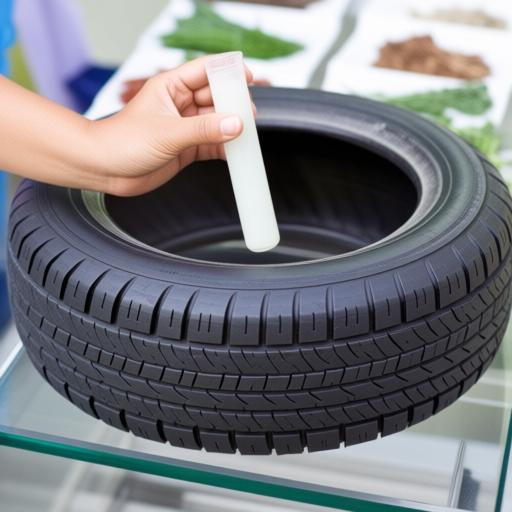
French tire manufacturer Michelin announced on November 1st that its truck tires using 45% renewable materials have passed real-road tests and are expected to enter commercial production in 2024. These renewable materials include natural rubber extracted from dandelions and carbon black recovered from waste plastics.
"We are steadily progressing towards the goal of achieving 100% sustainable material tires by 2050," said Bruno Van Duur, Vice President of Michelin's Truck Tire Business. "This breakthrough means each tire can reduce CO2 emissions by approximately 12 kg."
Also yesterday, Bridgestone showcased its guayule natural rubber alternative jointly developed with a synthetic biology company. This natural latex derived from a desert shrub can be grown in arid areas without occupying food crop land, providing a more sustainable source of natural rubber for the tire industry.
"Guayule has the potential to meet over 20% of the global demand for natural rubber," explained Ned Ewing, Chief Technology Officer of Bridgestone Americas. "This not only reduces dependence on rubber plantations in Southeast Asia but also significantly lowers the carbon footprint of raw material transportation."
China National Chemical Corporation's Aeolus Tire has taken another path. The company announced on October 31st that its dandelion rubber tire, developed in cooperation with the Chinese Academy of Sciences, has passed durability tests, with cumulative test mileage reaching 500,000 kilometers, and performance indicators fully meeting commercial requirements.
"The commercial application of dandelion rubber will change the pattern of China's high dependence on imported natural rubber," said Zhang Kai, Director of Aeolus Tire's Engineering Technology Center. "Each mu (approx. 0.165 acres) of dandelions can produce 100 kg of rubber, and two harvests can be obtained per year, with significant economic benefits."
Advances in materials science are not limited to natural rubber substitutes. Goodyear's sustainability report released yesterday showed that the proportion of soybean oil replacing petroleum-based materials in its latest generation of tires has increased to 25%, and the use of rice husk ash silica has increased by 15%.
"By using soybean oil as a plasticizer, we not only reduce carbon emissions but also improve tire flexibility at low temperatures, thereby enhancing grip on icy and snowy roads," said Chris Delaine, Senior Vice President of Global Operations at Goodyear.
Intelligent Systems: Digital Twins and Predictive Maintenance Lead Efficiency Revolution
While the material revolution is quietly underway, the digital and intelligent transformation of tires is changing the face of the freight industry in a more visible way. Over the past two days, several tech companies and tire manufacturers have launched intelligent tire solutions for commercial vehicles.
On November 1st, Swedish tech company Tyrata and Continental Tire jointly launched the IntelliTread automatic tread measurement system. This system uses drive-over sensors installed at parking lot exits to automatically measure tire tread depth and pressure without the need for trucks to stop.
"This technology can help fleet operators reduce tire inspection time from 15 minutes per session to just seconds," said Joe Greenwood, CEO of Tyrata. "The system can also automatically generate tire replacement recommendations and optimize fleet maintenance schedules."
On the same day, Pirelli launched the latest upgrade of its Cyber Tire system in Italy. The new system not only monitors tire status but also predicts remaining service life through algorithms and interacts with the vehicle's autonomous driving system in real-time.
"When the tire detects a slippery road surface, it sends an early warning to the autonomous driving system in advance, allowing adjustments to vehicle speed and braking distance," explained Marco Tronchetti Provera, CEO of Pirelli. "This is a major breakthrough in vehicle safety."
Chinese tech companies are also rapidly advancing in this field. Huawei Cloud announced a strategic cooperation with Zhongce Rubber Group yesterday to jointly develop a tire digital twin system based on cloud computing. This system can create a virtual model for each tire, simulating its working status and performance changes in real-time.
"By analyzing historical data and real-time sensor information, our system can predict the possibility of abnormal tire wear 2,000 kilometers in advance and provide targeted rotation or alignment suggestions," said Wang Yu, Director of Huawei Cloud's Automotive Industry Solutions.
The value of intelligent tire systems is particularly evident in logistics fleet operations. Data released yesterday by Amazon's Transportation Services department showed that after trialing an intelligent tire system in its fleet for one year, tire-related downtime was reduced by 35%, and fuel efficiency improved by 3.2%.
"Intelligent tires are no longer just components; they are key nodes in the fleet's digital management system," said Udi Maden, Global Fleet Director at Amazon. "We plan to equip all newly procured vans with intelligent tire systems by the end of 2024."
Market Transformation: Cost Pressure and Value Restructuring Proceed in Parallel
Behind the technological innovation, the tire market is undergoing profound structural changes. Industry data and market dynamics released in the past two days show that the value chain of the tire industry is being restructured.
Data released on November 1st by the US Tire Manufacturers Association showed that truck tire prices have increased by an average of 8.5% over the past year, while raw material costs rose by 12% during the same period. This gap reflects that the added value brought by technological innovation is being recognized by the market.
"Although the initial purchase cost of intelligent tires is 15-20% higher than traditional tires, the total cost of ownership over their entire life cycle can be reduced by up to 30%," said Scott Damer, CFO of Bridgestone, during an investor conference call.
Meanwhile, tire business models are also changing. Michelin announced yesterday the expansion of its "Tire as a Service" model to long-haul truck fleets in North America. This model charges per mile traveled and includes services such as tires, maintenance, retreading, and data analysis.
"Through this model, customers can convert variable costs into fixed costs, allowing for more accurate prediction of operating expenses," said Claudio Zanin, President of Michelin Fleet Solutions. "Since its launch in Europe last year, this model has attracted over 200 large fleet customers."
In the Chinese market, Zhongce Rubber Group launched a "Full Life Cycle Management" plan on October 31st, providing large logistics companies with one-stop services from tire selection, use, retreading, to recycling.
"We are no longer just tire manufacturers but partners in improving vehicle operational efficiency," said Shen Jinrong, Chairman of Zhongce Rubber Group, at the launch ceremony. "Through professional tire management, we have helped pilot customers reduce tire cost per kilometer by 0.008 yuan. For fleets traveling 100 million kilometers annually, this means annual savings of 800,000 yuan."
Retreaded tires, as an important part of the circular economy, have also received policy support. The "Circular Economy Action Plan" passed by the EU yesterday lists tire retreading as a priority development area, requiring that by 2030, the retreading rate for truck tires in the EU should increase from the current about 50% to 70%.
"A tire can typically be retreaded 2-3 times. The cost of each retreading is only 30-40% of a new tire but can provide over 90% of the original performance," said Martin Schuster, General Manager of German retreaded tire manufacturer EcoTrek. "With advances in materials science, we expect the number of retreading cycles for tires to increase in the future."
The transformation in the tire industry reflects the broader shift of the entire transportation sector towards intelligence and sustainability. As tires evolve from simple rubber products into intelligent systems integrating materials science, sensing technology, and data analysis, their value is no longer limited to providing basic driving functions.
Tightening policies and regulations, breakthroughs in materials science, and the integration of digital technologies – these three forces are jointly pushing the tire industry into an unprecedented period of innovation activity. In this transformation, companies that embrace intelligence and sustainable development early are defining the future of the freight industry.

Copyright © 2024-2025 Firemax Sdn. Bhd Company. All rights reserved.
Headquarters address:303 block C, Pusat Dagangan Phileo Damansara 1, No 9 Jln 16/11 Off Jalan Damansara, 46350 Petaling Jaya, Selangor. Malaysia Sales Hotline:+60 11-6449 0688 After-sales hotline:+60 11-6449 0688