

The global truck tire industry is currently navigating a dual transformation of technological advancement and market volatility. On one hand, international giants like Michelin and Continental have launched new-generation high-performance tires, enhancing durability and efficiency through material innovations and intelligent design-4-5. On the other hand, fluctuating raw material costs and trade policy adjustments have intensified price volatility, with companies including Zhongce Rubber and Sailun Group implementing price hikes of 2%-4% in early November-1. Amid these challenges, the industry is accelerating its shift toward green and intelligent solutions, injecting new momentum into the logistics and transportation sector.
Technology Frontline: Breakthroughs in Durability and Intelligence Lead Industry Upgrade
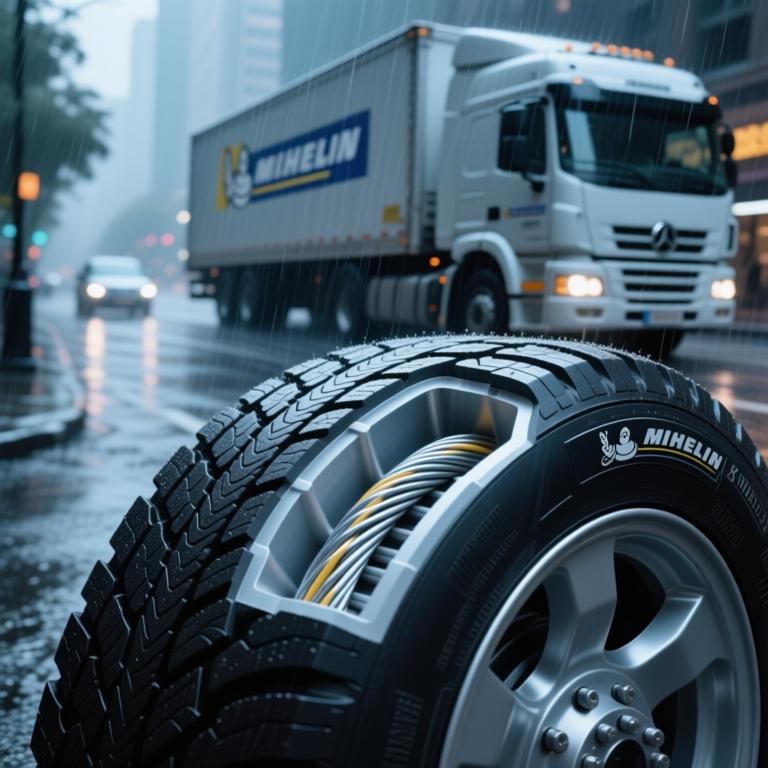
Technological innovation in tires has become a core focus of corporate competition. In November 2025, Michelin launched its new-generation "X Multi" series for urban trucks, incorporating three patented technologies such as Duracoil nylon-reinforced bead wires and Powercoil high-durability steel cables. These innovations increase mileage by 30% on steer axles and 15% on drive axles-4. The tread sculptures, created through 3D metal printing, further optimize grip and wear uniformity, meeting the demands of urban logistics vehicles for complex road conditions.
Simultaneously, Continental Tire introduced the ContiTread HTR retread, designed for regional and long-haul transport. It uses lightweight compounds and a rounded shoulder design to significantly enhance wear resistance, while a heat-reducing compound preserves casing integrity, allowing multiple retreads and extending the tire's lifecycle-5. Shaun Uys, Vice President of Continental's U.S. commercial vehicle tire business, stated, "This represents a significant advancement in retread technology, designed to outperform its predecessor, the HTL."-5
Notable progress is also being made in intelligent systems. Nokian Tyres launched the Intuitu 2.0 Smart Pressure Assistant on October 31. Its built-in sensors calculate vehicle load and road conditions in real-time, providing tire pressure recommendations via a mobile app to reduce fuel consumption and soil compaction risks-8. Mika Penttilä, Head of Digital Technologies at Nokian, noted, "In the future, tires will continuously communicate with vehicle brake and assist systems, generating real-time road condition data to enhance safety for all road users."
Market Dynamics: Cost Pressures and Trade Environment Drive Price Adjustments
From September to November 2025, the global tire market experienced a new wave of price increases. Rising costs of raw materials like natural rubber and carbon black led over 20 companies, including Zhongce Rubber, Sailun Group, and Wanli Tire, to issue price adjustment notices, with increases generally ranging between 2%-4%-1. For instance, Wanli Tire plans to raise TBR (Truck and Bus Radial) prices by 2%-4% starting November 15, while others like Yanchang Rubber and Zhongyi Rubber implemented new prices on November 1-1. Dealers have responded by stocking up in advance to mitigate future cost rises and secure inventory.
Trade policies have added uncertainty. U.S. tariffs on medium- and heavy-duty vehicle components took effect on November 1, and the EU has initiated anti-dumping investigations into passenger and light truck tires from China-3. However, leading companies with overseas production capacity, such as Sailun Tire and Linglong Group, have partially offset tariff impacts by flexibly allocating orders through their Southeast Asian and Mexican facilities-3. Guojin Securities analysis indicates that as raw material prices stabilize and tariff effects are absorbed, industry profits are expected to gradually recover in the second half of 2025-3.
Demand structure is also shifting. The U.S. Tire Manufacturers Association (USTMA) forecasts that U.S. replacement tire shipments will grow by 4.4 million units in 2025, with truck and bus replacement tires increasing by 3.7%. In contrast, original equipment (OE) tire markets have declined by 8% due to production cuts by vehicle manufacturers-6-7. This highlights rising demand for aftermarket services and cost-effective products, creating new opportunities for technologically advanced enterprises.
Green Transition: Material Innovation and Circular Economy as Long-Term Drivers
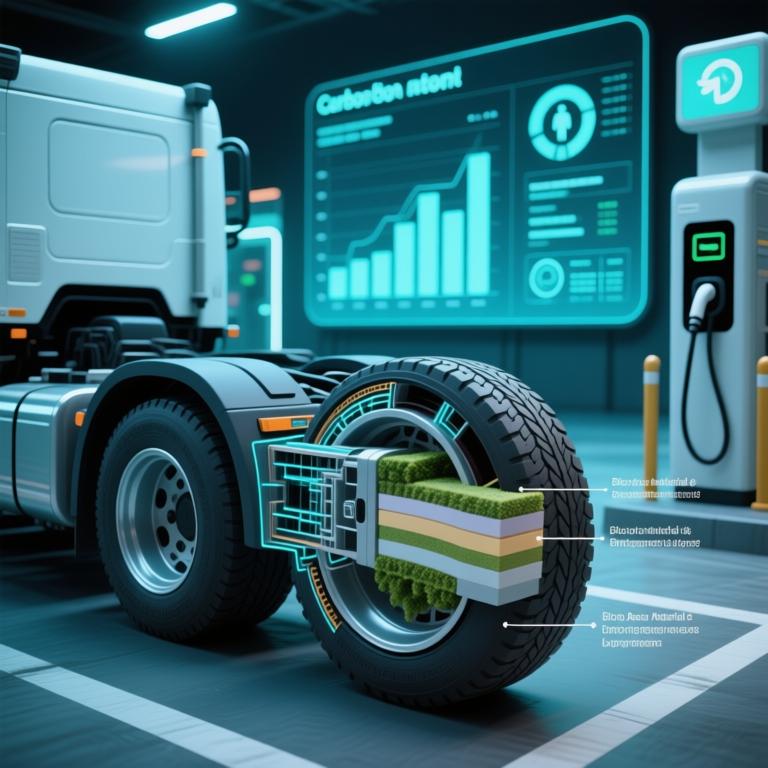
Sustainability principles are deeply integrating into tire research and development. Zhongce Rubber's July global launch of tires specifically for electric commercial vehicles utilizes its "X Technology System," combining materials like X Carbon Extreme and X Mysterious Armor to address wear issues caused by high torque and heavy loads in EVs-2. Their 110 university collaboration projects have yielded 195 patents, achieving breakthroughs in six key performance areas-2. Xu Wenying, President of the China Rubber Industry Association, remarked that such technologies are vital practices under the industry's "high-end, intelligent, green" strategy-2.
Retreading technology also plays a crucial role in the circular economy. Continental's ContiTread HTR uses heat-reducing compounds that enable multiple casing retreads, reducing resource waste-5. Furthermore, Nokian's intelligent system optimizes tire pressure to extend tire life and reduce soil compaction, supporting low-carbon agricultural transport-8. These innovations align with the EU's Circular Economy Action Plan target to increase truck tire retreading rates from 50% to 70% by 2030-3.
Industry Outlook: Technology Integration and Global Layout to Determine Future Success
Amid short-term price fluctuations and long-term transition needs, the industry's competitive edge is shifting from cost control to building technological ecosystems. Leading companies are enhancing risk resilience through overseas base expansion (e.g., Sailun's Indonesia plant, Linglong's Serbia project) and leveraging digital tools to optimize supply chains-3. Concurrently, the deep integration of smart tires with vehicle networks will transform tires from simple components into "sensing terminals," providing real-time road data for autonomous logistics systems-8.
Analysis from China Energy Network suggests that despite trade friction and raw material volatility, the cost-effective tire market holds significant potential against the backdrop of consumption downgrading-3. In the next three years, enterprises that pioneer globalized operations and master core material technologies are poised to seize opportunities from rising order volumes and prices in European and American markets.


Copyright © 2024-2025 Firemax Sdn. Bhd Company. All rights reserved.
Headquarters address:303 block C, Pusat Dagangan Phileo Damansara 1, No 9 Jln 16/11 Off Jalan Damansara, 46350 Petaling Jaya, Selangor. Malaysia Sales Hotline:+60 11-6449 0688 After-sales hotline:+60 11-6449 0688