
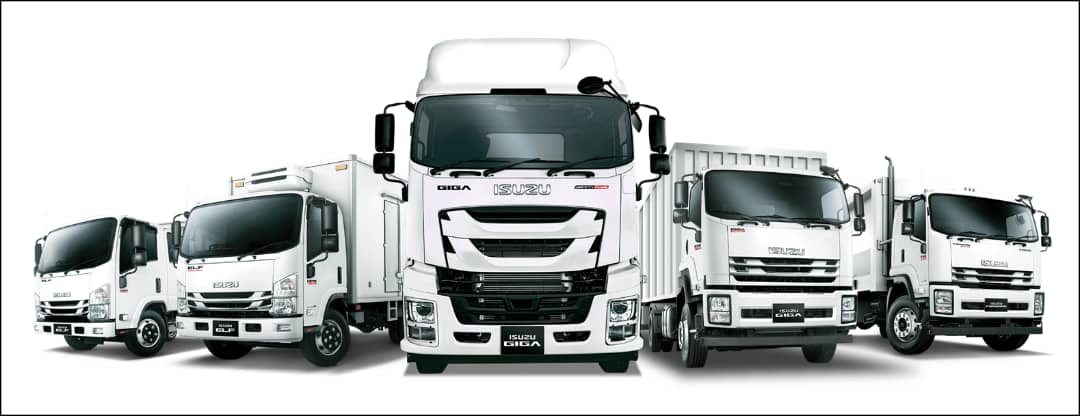

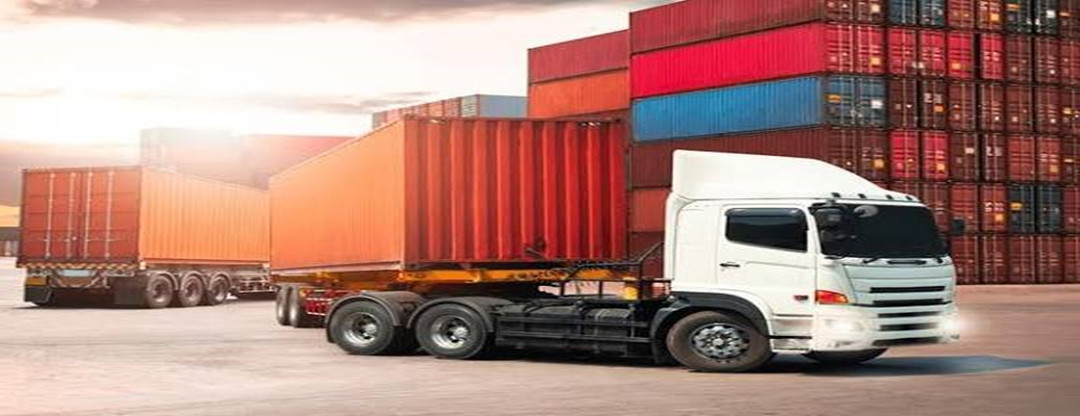
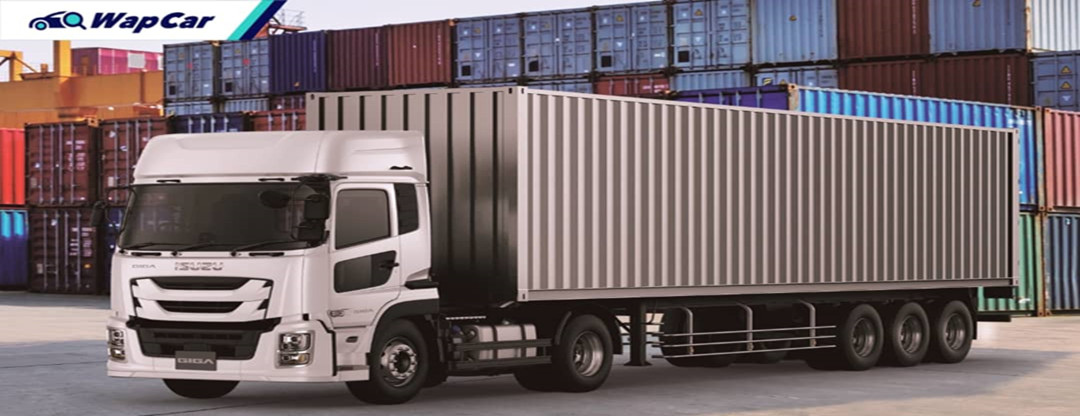

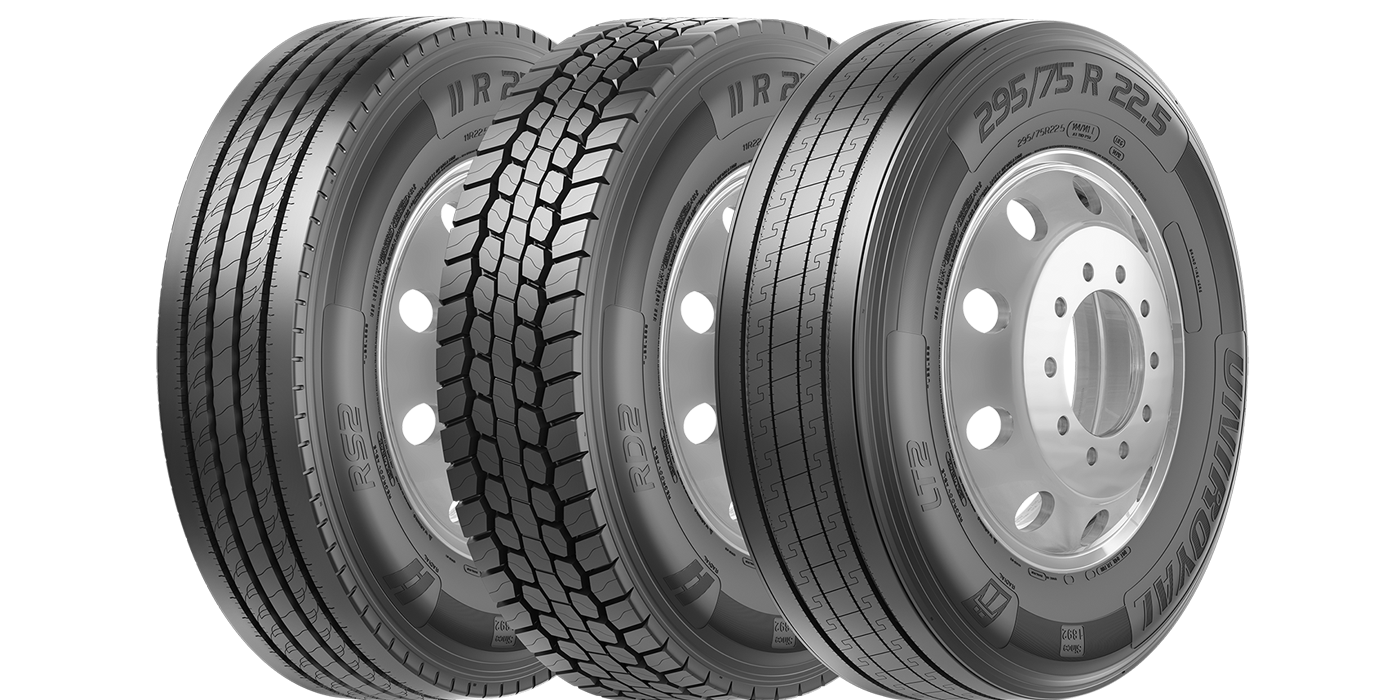
▲ Full-steel radial tires are the core consumable for commercial freight vehicles, with the shortest replacement cycle as brief as 0.7 years. (Source: Tire World Network)
Overview
In 2025, China's full-steel tire production hit a five-year high with a year-on-year increase of 6.28%, supported by strong commercial vehicle market growth. However, as 2026 opened, the industry found itself pulled in two opposing directions simultaneously: on one side, manufacturers pushing price hikes to protect margins and meet annual targets; on the other, distribution channels straining under mounting inventories that proved stubbornly difficult to move. This supply-demand standoff, playing out precisely during the slowest weeks of the pre-Chinese New Year season, has given the commercial truck tire market one of its more complicated starts in recent memory.
Data from Zhuochuang Information, based on in-depth research across 62 full-steel tire distributors nationwide — covering major consumption hubs in East China, North China, and Central China — shows that in December 2025, a full 78% of surveyed distributors reported higher inventory levels compared to the prior month. Only 5% managed to reduce stock. These figures point directly to the intensifying tension building across the supply chain.
1. Behind the 2025 Production Surge: Exports Carried the Weight
Looking back at 2025 as a whole, full-steel tire output delivered a genuinely impressive performance. Among all tire categories, full-steel tires led the growth, with cumulative output rising 6.28% year-on-year — roughly four times the 1.66% growth rate recorded for semi-steel passenger car tires. This divergence reflects both the strength of commercial vehicle OEM demand and the outsize contribution from export markets.
Between January and November 2025, China exported a total of 643.21 million new pneumatic rubber tires, up 3.8% year-on-year. November alone contributed 56.57 million units, representing 1.0% growth compared to the same month of 2024. Even as Europe's anti-dumping investigations began to create real headwinds — with initial tariff impacts showing up in export data — Chinese tire manufacturers have been actively building production bases in Southeast Asia to maintain market access. Sailun, General Tire, and Double Star, among others, have expanded or brought new factories online in Cambodia, Thailand, and Vietnam, allowing Chinese brands to serve European and North American replacement markets under locally-manufactured status.
What makes truck tires a fundamentally different business from passenger car tires is the dramatically shorter replacement cycle. A standard heavy-duty truck typically runs on eleven tires, and the replacement-to-OEM ratio for full-steel commercial tires ranges from 3.29 to 4.45, compared to just 2.46 to 2.95 for passenger vehicle semi-steel tires. The shortest replacement cycle for a medium-duty cargo truck can be as low as 0.7 years — meaning within twelve months, a truck operator may already be purchasing the vehicle's second set of tires. With China's commercial truck fleet growing steadily, this recurring demand provides a structurally durable revenue floor for the industry.
2. Price Standoff: Manufacturers Raise Prices, Market Barely Responds
Around October 2025, a wave of price increase announcements swept through the industry, with multiple domestic and international tire manufacturers notifying distributors of upward adjustments ranging from 2% to 5% — according to an Eastmoney Securities research report. The rationale was straightforward: raw material costs, particularly natural and synthetic rubber, account for over 60% of tire production costs, and sustained increases in those inputs were compressing margins across the board.
The market's response, however, was tepid at best. Terminal demand showed no meaningful uptick. Outdoor construction activity and mining operations slowed as temperatures fell across northern China, logistics demand softened ahead of the holiday season, and truck operators displayed little urgency around tire procurement. Zhuochuang Information analyst Chen Qingqing told reporters that as the year-end approached, distributors shifted their focus almost entirely toward contract renewals and accounts receivable collection, dramatically reducing their appetite for proactive selling. Inventory moved only at the pace of the most basic, unavoidable demand.
Truck tire pricing in early 2026 shows notable dispersion: mainstream specifications for full-steel commercial truck tires range from approximately RMB 1,500 to RMB 5,000 per unit, with the wide spread reflecting differences in brand positioning, tire specification, and channel layer. Fuel-efficient, low-rolling-resistance tires carry a premium over conventional products, but are gaining traction among cost-conscious fleet owners, as the fuel savings over a truck's operating life can more than offset the higher upfront cost.
3. 2026 Outlook: Growth Decelerates, Market Rationalizes
Entering 2026, the full-steel tire industry finds itself at a delicate turning point. Zhuochuang Information's comprehensive assessment suggests that full-steel tire production volumes will continue to grow this year, but at a materially slower pace — with the preliminary forecast pointing to annual output growth of around 1%.
The logic behind this deceleration is multi-layered. The 12% surge in commercial vehicle output in 2025 created a high base effect that will weigh on OEM-side tire demand in 2026; the research firm expects commercial vehicle production to expand at a more moderate 4%-5% this year. The replacement market faces its own headwinds: persistent overcapacity in freight transport keeps truckers' profitability under pressure and dulls their willingness to invest in new tires ahead of schedule. Meanwhile, property sector investment continues to hover near cyclical lows, limiting the pull-through demand for heavy-construction and infrastructure vehicles.
Export markets remain the critical anchor for full-steel tire demand growth in 2026, but the operating environment is less forgiving than it was. Europe's anti-dumping probes have begun translating into higher tariffs on specific tire categories, while geopolitical uncertainty and currency volatility complicate the economics of U.S.-bound shipments. Chinese tire companies are responding by accelerating their offshore manufacturing buildout across Thailand, Vietnam, and Cambodia, pursuing a supply chain diversification strategy designed to reduce vulnerability to any single trade barrier.
The post-Chinese New Year period traditionally marks a meaningful demand recovery window for commercial tires. As logistics flows resume, construction sites reopen, and mining operations return to full capacity, March and April typically bring a visible pickup in tire purchasing. Industry observers broadly agree that the strength of this spring rebound will go a long way toward determining whether the full-steel tire market can manage a soft landing through its current inventory overhang.
4. Beyond the Product: Service-Oriented Models Quietly Gaining Ground
As price competition intensifies and commodity-style margin erosion accelerates, a growing number of tire companies and distributors are pivoting toward comprehensive lifecycle management services. Rather than competing solely on the price of a single tire purchase, these operators offer fleet accounts bundled solutions covering procurement, installation, pressure monitoring, tread wear tracking, and retreading services.
The economics of this model are compelling precisely because of the replacement dynamics described earlier. With a standard heavy-duty truck consuming eleven tires at a time, and replacement cycles running far shorter than for passenger vehicles, each vehicle in a fleet operator's inventory represents years of recurring revenue potential. The companies that can lock in fleet client relationships through embedded monitoring, predictive maintenance alerts, and multi-year service agreements are effectively securing long-term access to the highest-volume segment of the replacement market.
Digital integration is quietly reshaping tire maintenance as well. A handful of companies are now embedding sensors on tire inner surfaces that continuously track pressure and wear patterns, with smart alert systems notifying drivers or fleet managers when replacement is genuinely imminent rather than merely overdue. This approach — effectively treating tires-as-a-service rather than as a one-time purchase — holds the potential to improve road safety by catching deterioration before it leads to blowouts, while also reducing the cargo loss and operational disruption that tire failures cause.
5. Raw Material Costs: From Margin Crusher to Market Variable
Whatever else changes in the competitive landscape, raw material prices remain the single most powerful force shaping profitability across the full-steel tire industry. Natural rubber price movements affect production costs directly, and they also influence distributor restocking behavior in ways that can amplify — or dampen — inventory cycles far from the factory gate.
As 2025 drew to a close, natural rubber entered its traditional peak season, with prices expected to find some support from seasonal demand dynamics. However, Guangda Futures analysts noted that as Southeast Asian tapping regions approach their annual dormancy period around late January, this should provide only brief and limited price support. With downstream tire factory utilization rates running below seasonal norms, the scope for a sustained rubber price rally appears constrained.
Carbon black — a critical reinforcing additive that gives commercial tires their durability and abrasion resistance — presents a somewhat different picture. In 2025, the carbon black industry experienced persistent oversupply, with month-end inventory levels consistently sitting at the high end of their five-year historical range. According to Zhuochuang Information carbon black analyst Liu Xiao, demand from full-steel tire manufacturers increased in 2025, but this was insufficient to offset declines elsewhere in rubber products, keeping market prices subdued throughout the year. Looking ahead to 2026, the carbon black sector is expected to welcome significant new capacity additions — concentrated in this calendar year — which should continue to exert downward pressure on prices and provide some manufacturing cost relief for tire producers.
Conclusion
For truck operators, tires are never simply a rubber commodity. They are operational infrastructure — a determinant of fuel economy, cargo security, driver safety, and delivery reliability. In an environment where industry margins are compressed and market pricing reflects months of accumulated tension between manufacturers and distributors, the decision of which tire to buy, from whom, and when has rarely carried more genuine consequence.
The answers will begin to emerge in the weeks after the Chinese New Year holiday. As supply chains restart and freight volumes recover, the pace at which warehouses clear their unsold inventories and distributors return to normal purchasing rhythms will serve as a real-time barometer of the full-steel tire market's underlying health. The spring season — always a defining stretch for commercial tire demand — will tell us how much of 2025's impressive production surge was genuinely absorbed, and how much remains to be digested as 2026 unfolds.
Copyright © 2024-2025 Firemax Sdn. Bhd Company. All rights reserved.
Headquarters address:303 block C, Pusat Dagangan Phileo Damansara 1, No 9 Jln 16/11 Off Jalan Damansara, 46350 Petaling Jaya, Selangor. Malaysia Sales Hotline:+60 11-6449 0688 After-sales hotline:+60 11-6449 0688