
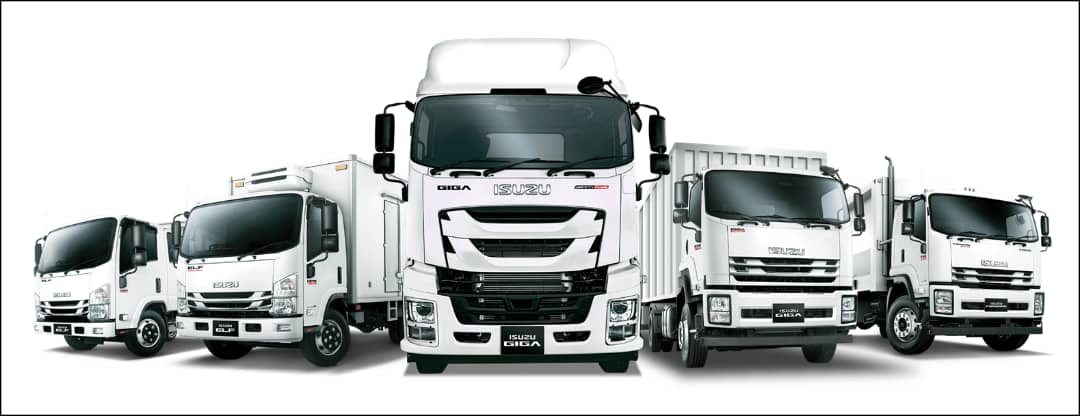
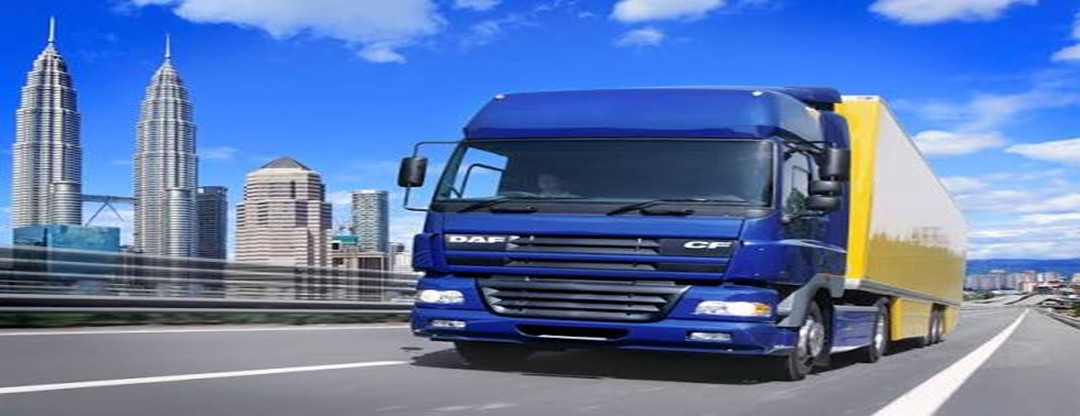
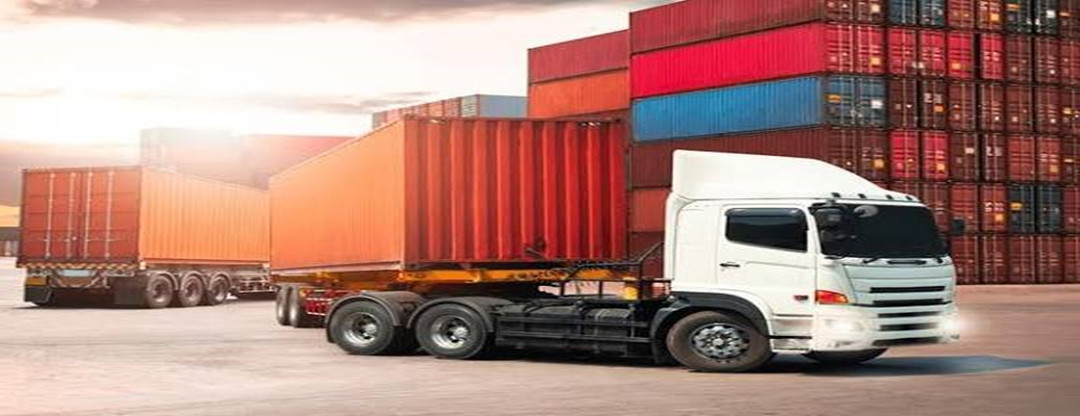
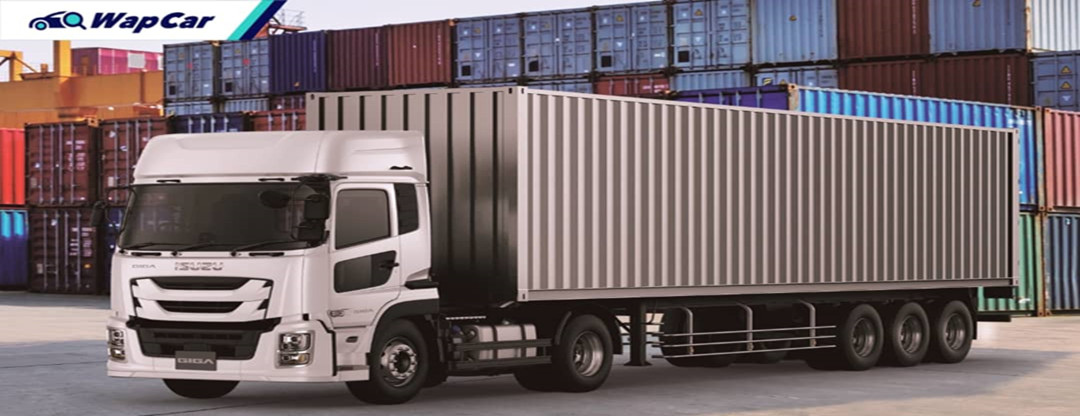

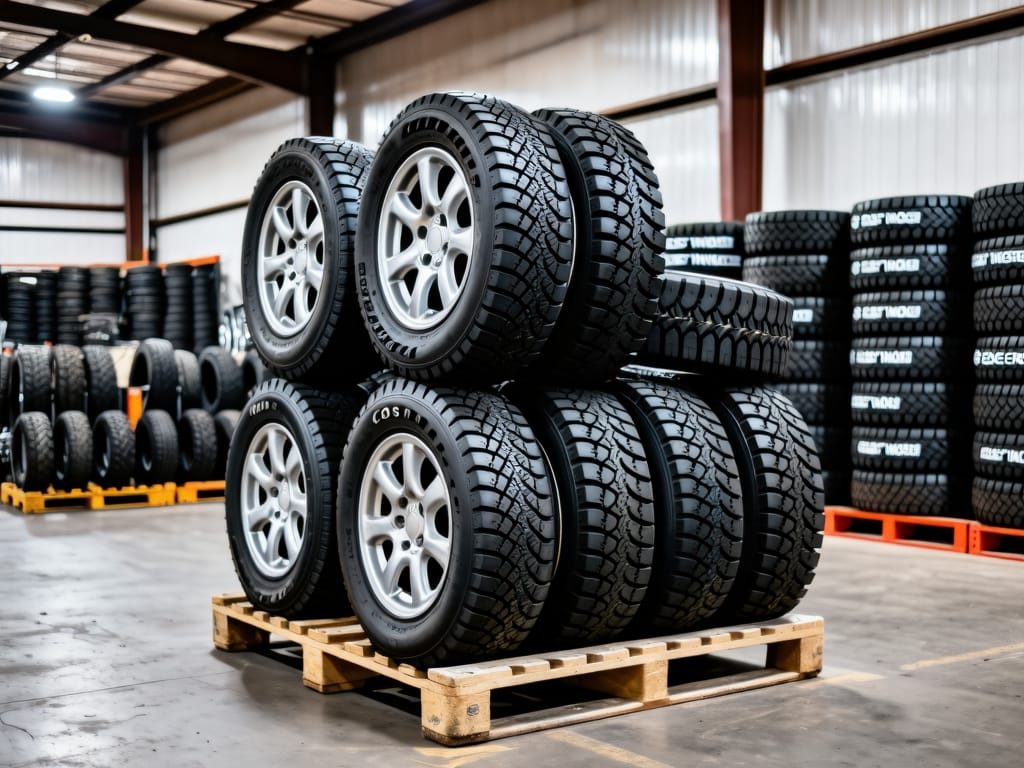
▲ Full-steel radial tires are the core consumable of the freight industry. Each heavy-duty truck requires an average of 11 tires. (Source: Zhuochuang Information / Tire World Network)
【Overview】
The Spring Festival holiday has barely ended, yet the freight industry is already entering what insiders regard as the most decisive window of the year. In 2025, China's full-steel tire output rose 7.19% year-on-year while demand expanded 6.66%, marking the strongest double increase in five years — driven in large part by an exceptional commercial vehicle market. Yet as 2026 opens, the industry is navigating two currents pulling in opposite directions. On one side, a pre-holiday inventory buildup has been frustratingly slow to clear. On the other, the government's continued expansion of its large-scale equipment-renewal and trade-in policies is pushing new-energy heavy truck penetration higher, opening a fresh demand window for purpose-built commercial tire products. Between policy tailwinds and inventory headwinds, the direction of China's truck tire market in 2026 is far from settled.
1. Starting From 2025's Record Run — and the Inventory Warning Beneath It
Looking back at 2025, the annual numbers gave many tire companies good reason for optimism in their year-end reports. According to Sina Finance (February 12, 2026), China produced 1.207 billion pneumatic rubber outer tires in 2025, with full-steel tire (TBR) output growing 7.19% year-on-year — more than five times the 1.33% gain in semi-steel passenger tires. On the demand side, Zhuochuang Information's industry tracker shows cumulative full-steel tire demand expanded 6.66% for the full year, characterised by strong OEM pull, slow but positive replacement recovery, and high-growth export markets providing a firm floor.
The commercial vehicle sector was the primary fuel for this run. A 12% surge in domestic commercial vehicle output in 2025 created compounding downstream tire demand: a standard heavy-duty truck requires eleven full-steel tires, and the replacement cycle for medium-duty cargo trucks can be as short as 0.7 years — compared to 3.3 years on average for passenger cars (source: Fenghuobao/Michelin annual data). Every additional truck sold effectively opens a sustained tire consumption stream. The OEM-to-replacement flywheel is why 2025's commercial vehicle surge translated so directly into full-steel tire growth.
Export momentum was another meaningful contributor. Full-steel tire exports grew 7.42% in 2025 despite mounting headwinds from Europe's anti-dumping investigations. Companies like Sailun, General Tire, and Linglong managed to sustain market access through Southeast Asian manufacturing plants in Vietnam and Cambodia, delivering product into European and North American replacement channels under locally-made status. Sailun Tire confirmed in its February 2, 2026 investor Q&A (Securities Daily) that its TBR business remains a core focus, with multi-region capacity providing a meaningful competitive buffer.
▲ Zhuochuang Information's survey of 62 distributors found 78% recorded higher inventory in December 2025 vs. the prior month — only 5% reduced stock. (Source: National Business Daily, Jan 7, 2026)
Behind the headline growth numbers, however, year-end market sentiment was considerably less comfortable. Zhuochuang Information's survey of 62 full-steel tire distributors across East, North, and Central China found that 78% reported higher inventory in December 2025 relative to November, while only 5% managed to reduce stock (National Business Daily, January 7, 2026). Analyst Chen Qingqing noted that outdoor operations and mining activity slowed sharply as temperatures fell, while logistics demand softened ahead of the holiday. Compounding the problem, distributors shifted their focus to contract renewals and receivables collection as year-end approached, pulling back from proactive selling. The result: inventory consumed only at the pace of the most basic, unavoidable demand — and as the Spring Festival neared, January shaped up to be the softest month of the cycle.
2. Government Policy Adds Fuel — New-Energy Heavy Truck Tires Become the Newest Growth Arena
While the industry worked through its inventory overhang, a policy document quietly reset some companies' near-term assumptions. In early 2026, China's National Development and Reform Commission and Ministry of Finance jointly issued a notice on implementing large-scale equipment renewal and trade-in programs for the year. The notice explicitly continues support for retiring commercial trucks at National IV emission standards or below — and for the first time, it prioritises replacement with electric trucks, offering new-energy heavy trucks subsidies of up to RMB 140,000 per vehicle (Sina Finance, January 4, 2026).
For the truck tire industry, the implications are structural. Full-steel tires designed for new-energy heavy trucks carry meaningfully different performance requirements from conventional diesel-truck tires: higher load ratings to handle the added battery weight, lower rolling resistance to protect electric range, and superior heat management to cope with the torque characteristics of electric drivetrains. These requirements translate into higher production costs and correspondingly higher selling prices. Tyre expert Zhang Xiang, senior adviser at Beijing Zhongzhi Huaxing Engineering Research Institute, told 21st Century Business Herald that new-energy vehicle tires are 'universally more expensive than those for internal-combustion vehicles, and carry higher margins' — a dynamic that is now extending from passenger cars into the commercial vehicle segment. General Tire has already launched its Longma ET commercial green tire line specifically targeting the new-energy heavy truck market.
Taking a longer view, China National Heavy Duty Truck Group President Liu Wei has publicly forecast that new-energy heavy truck market penetration will exceed 50% by 2030, with annual sales surpassing 450,000 units; CATL Chairman Robin Zeng has suggested 2028 as an even earlier milestone for that threshold. Whichever timeline proves accurate, the replacement demand curve for purpose-built new-energy commercial tires will build substantially over the next several years — and companies including Guizhou Tire, Wanli, and Jinyu have already launched dedicated new-energy heavy truck tire products, staking out positions in a market that is still in its early innings.
▲ New-energy heavy trucks' demanding load and rolling-resistance requirements are driving a new round of technical upgrading across the full-steel tire product range. (Source: Find800.cn)
3. Tightening Green Certification Reshapes the Industry's Competitive Moat
In January 2026, China's State Administration for Market Regulation co-published a revised version of the Green Product Certification and Labeling Management Measures — the country's first comprehensive, full-chain regulatory framework for green product certification (Zhiyan Consulting). Tires fall squarely within its scope. Under the national standard GB/T 40718-2021, a 'green tire' must meet environmental requirements across its entire lifecycle, cause no significant harm to ecosystems or human health, and consume materially less energy and resources than conventional products.
For commercial truck tire manufacturers, this regulatory tightening is a double-edged development. As of end-2025, only 18 valid green tire certifications had been issued across China, covering 15 companies — including Sumitomo Rubber (Changshu), Zhongce Rubber, Qingdao Double Star, and Fujian Giti. Certified products carry meaningful advantages: smoother access to European replacement markets navigating increasingly stringent tariff conditions, and stronger pricing power in domestic channels. For smaller tire makers outside the certification system, the risk of progressive marginalisation is real.
The underlying market is already responding. Zhiyan Consulting data shows that green tire sales penetration reached 23% in 2024, up 8 percentage points from 2020, with sales volume exceeding 160 million units in 2025. Meanwhile, the EU's updated tire labeling regulation, in force from July 2025, has banned Class C and below tires from the replacement market in Europe — effectively using standards to redraw competitive boundaries in one of China's most important export destinations. The window for Chinese commercial tire makers to complete their green transition may be narrower than the industry currently appreciates.
4. 2026 Outlook: Slower Growth is the Consensus, But Structural Opportunities Remain
Taken together, 2026 is shaping up as a year of deceleration for full-steel tire volumes — a view shared across the research community. Zhuochuang Information's comprehensive assessment projects that demand growth will slow noticeably from 2025: the high base from that year's 12% commercial vehicle output surge will drag on OEM-linked tire demand, with commercial vehicle production growth expected to moderate to 4%-5% in 2026. The replacement market recovery should remain gradual, with freight overcapacity persisting and property investment continuing to hover near cyclical lows. China's GDP is preliminarily projected at 4.5%-5% for the year, with policy easing providing some demand support but unlikely to fully offset the structural headwinds (Tonghuashun / Zhuochuang Information, January 26, 2026).
On the export front, resilience remains but resistance is rising. Europe's anti-dumping investigations may begin generating more tangible tariff impacts on full-steel tire categories during 2026. The United States market faces additional uncertainty following reports that the Trump administration is considering raising global goods tariffs from 10% to 15%, after an initial round of 'equivalent tariffs' was struck down by the Supreme Court (Sina Finance, February 24, 2026). Chinese tire companies are responding by accelerating capacity deployment in Southeast Asia, Mexico, and Indonesia — building local manufacturing buffers designed to reduce exposure to any single trade barrier.
As the post-Spring Festival weeks unfold, the market is entering its traditional demand recovery window. The resumption of logistics flows, the reopening of construction sites, and the return to full capacity of mining operations typically generate a visible demand surge in March and April. How quickly distributors work through their accumulated inventories during this stretch will serve as the clearest indicator of whether 2026's full-steel tire market achieves a soft landing — or carries last year's excess baggage deep into the second quarter. For a sector whose products ultimately keep the freight economy rolling, the stakes of getting that balance right are considerable.
Copyright © 2024-2025 Firemax Sdn. Bhd Company. All rights reserved.
Headquarters address:303 block C, Pusat Dagangan Phileo Damansara 1, No 9 Jln 16/11 Off Jalan Damansara, 46350 Petaling Jaya, Selangor. Malaysia Sales Hotline:+60 11-6449 0688 After-sales hotline:+60 11-6449 0688